Tire Data
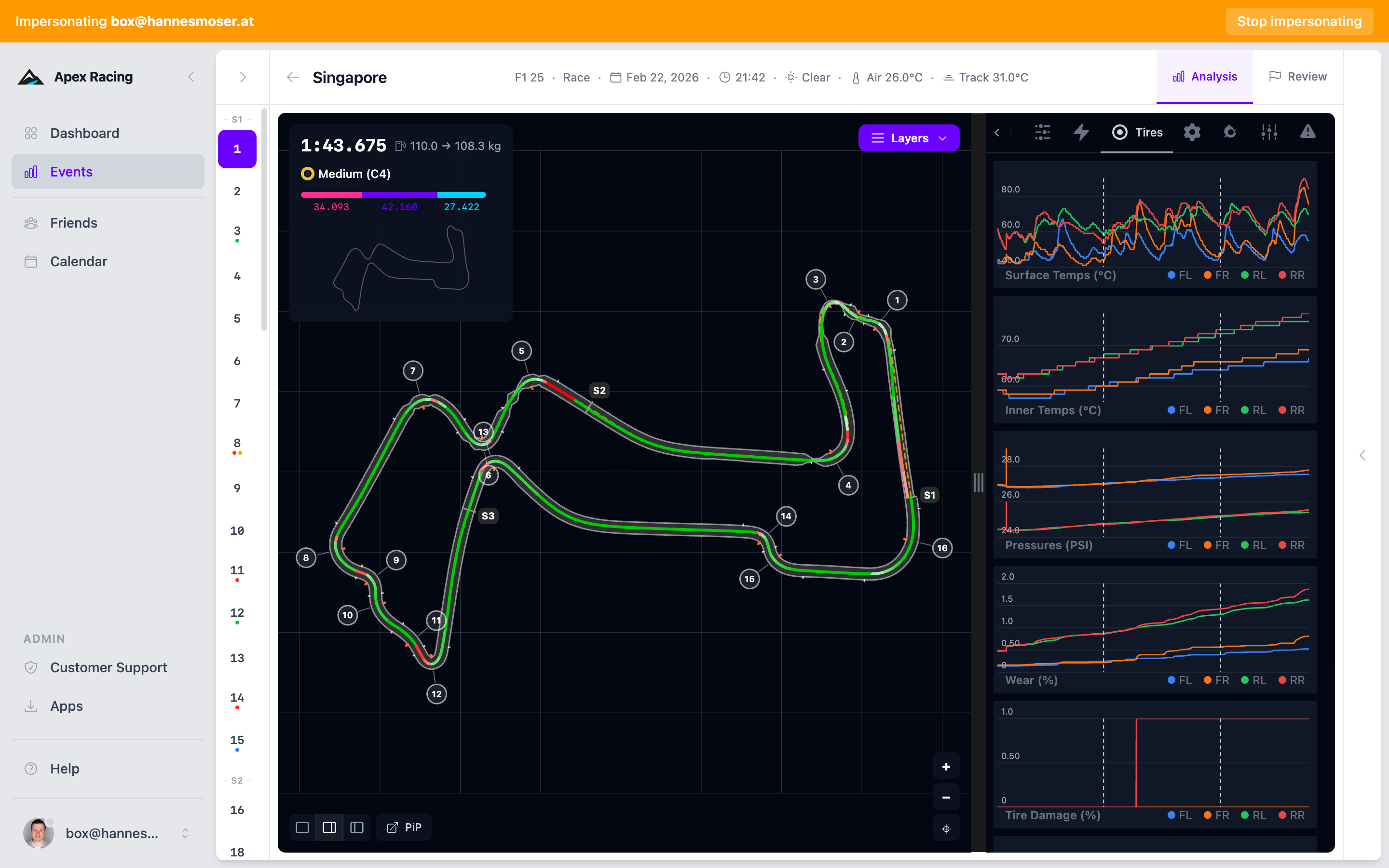
Tire management is one of the most important skills in sim racing. Apex Racing tracks detailed tire data to help you understand wear patterns and optimize your driving.
Tire Compounds
In games that support multiple compounds (like F1 25), each stint records which compound was used:
- Soft (S) — highest grip, fastest degradation
- Medium (M) — balanced grip and durability
- Hard (H) — lowest grip, longest lasting
- Intermediate (I) — for light rain
- Wet (W) — for heavy rain
Tire Temperatures
Three temperature readings are tracked per wheel:
- Surface temperature — the outer layer, most responsive to driving style
- Inner (carcass) temperature — the tire core, changes more slowly
- Brake temperature — disc temperature, affects braking performance
What to Look For
- Even temperatures across all four tires indicate good car balance
- Hot front tires with cool rears suggest understeer — the fronts are working too hard
- Hot rears with cool fronts suggest oversteer
- Temperature spikes often correspond to lockups or sustained slides
Tire Pressures
Tire pressure affects grip and handling:
- Low pressure — more contact patch, better grip, but increased wear and risk of overheating
- High pressure — less grip, but more responsive turn-in and lower rolling resistance
Monitor pressure changes during a stint — they rise as tires heat up.
Tire Wear
Wear is shown as a percentage of remaining tire life. Track wear across a stint to understand:
- How many laps a compound lasts at your pace
- Whether one corner of the car is wearing faster (often indicates setup imbalance)
- When to pit for fresh tires in a race
Temperature Target Ranges
Different compounds have different optimal temperature windows:
| Compound | Surface Target | Inner Target |
|---|---|---|
| Soft | 90–105°C | 85–100°C |
| Medium | 85–100°C | 80–95°C |
| Hard | 80–95°C | 75–90°C |
| Intermediate | 70–90°C | 65–85°C |
| Wet | 50–70°C | 50–65°C |
These ranges are approximate and vary by game. Within the target window, the tire produces maximum grip.
Surface vs Inner Temperature
The gap between surface and inner temperature tells you about tire condition:
- Less than 5°C gap — Tire is in good equilibrium, performing well
- 5–15°C gap — Normal during hard driving, surface heating faster than the core
- More than 15°C gap — Graining risk. The surface is overheating while the core is cold, causing small pieces of rubber to roll up and reduce grip. This is common in the first few laps on new tires or when pushing on a cold track.
Pressure Rise During a Stint
Tire pressure increases as the tire heats up — typically 1–3 PSI over a stint. Monitor the pressure curve:
- Rapid initial rise — Normal in the first 2–3 laps as tires come up to temperature
- Steady state — Pressure stabilizes as thermal equilibrium is reached
- Continued climb — The tire is still building heat, possibly from overdriving or ambient conditions
Starting pressure affects the entire stint, so correlating pressure data with lap times helps dial in optimal cold pressures for your setup.
Wear Rate Thresholds
| Rate | Assessment | Action |
|---|---|---|
| < 1%/lap | Gentle | Compound could be pushed harder or you could use a softer tire |
| 1–2%/lap | Normal | Sustainable for a typical stint |
| 2–3%/lap | Aggressive | Monitor closely, may need to adjust driving or pit earlier |
| > 3%/lap | Critical | Unsustainable. Check for lockups, excessive sliding, or setup issues |
See also: Telemetry Charts for visualizing tire data, Corner Analysis for corner-specific tire usage